
Stephen Maturen/Getty Images

Audio By Carbonatix
A reminder for those who seem to be confused: Reporting, broadcasting, posting or yelling about what cops and ICE agents do in public is not a crime. In fact, it is protected speech under the First Amendment.
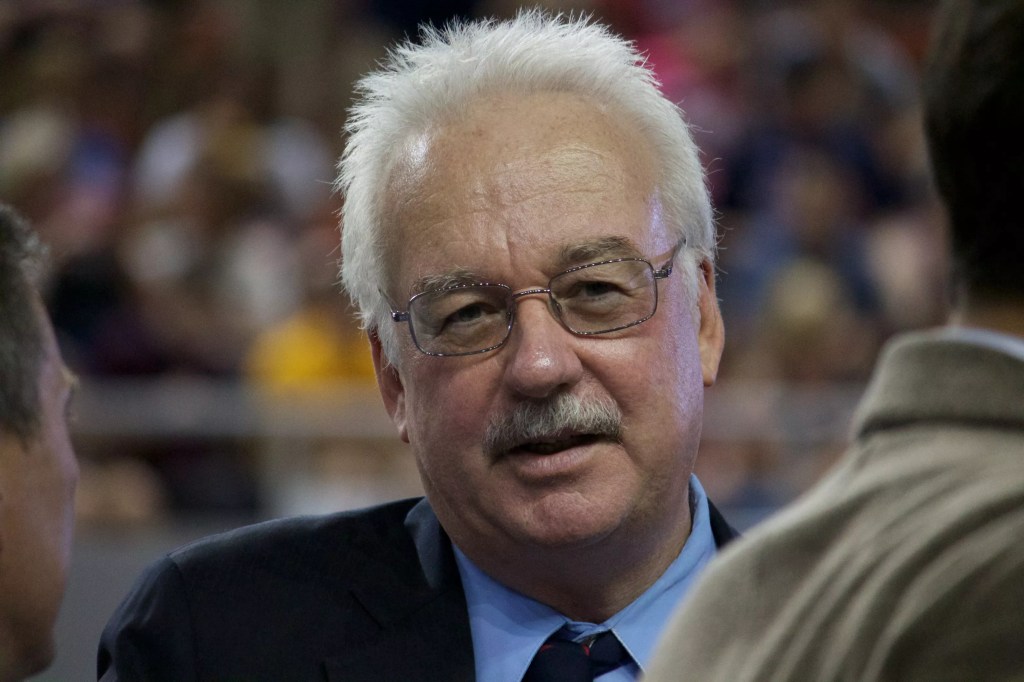
Republican state Sen. John Kavanagh seems to have forgotten that.
Kavanagh is running a bill at the Arizona Legislature that claims to be about outlawing the act of tipping off a suspect who faces imminent arrest by law enforcement. In reality, it appears to be geared more toward criminalizing community activism, specifically the act of alerting one’s neighbors that Immigration and Customs Agents are rolling through the neighborhood.
If passed, Senate Bill 1635 would establish an “unlawful alerting” law that bars anyone “knowingly communicat(ing)” information to another person about a “real-time, imminent or ongoing effort” to arrest that person by a law enforcement entity, including local police or federal agents. An offense would be punishable by up to six months in jail.
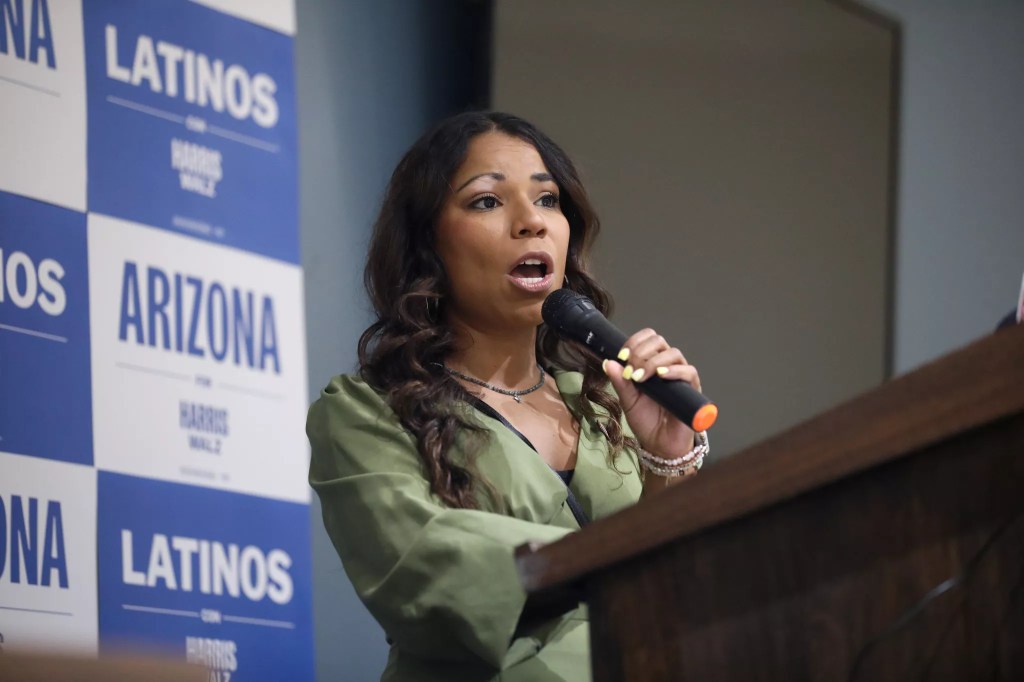
In a press release about the bill, Kavanagh name-dropped Democratic state Sen. Analise Ortiz, who faces a ticky-tack ethics complaint in the Arizona Senate for reposting a neighborhood ICE alert on Instagram story last year.
“As President Trump works to remove criminal illegal aliens from our communities, radical Democrat lawmakers, including Senator Analise Ortiz, have chosen to interfere and help criminals evade arrest,” Kavanagh said in the release. “That behavior endangers law enforcement officers, threatens public safety, and shows a complete disregard for the rule of law. Arizona is not a state of anarchy, and we will not tolerate elected officials undermining active law enforcement operations.”
Despite the tough talk, Kavanagh’s bill might not actually cover posts like Ortiz’s, which identified only intersections where federal agents had been seen. In an interview with Phoenix New Times, Kavanagh admitted as much.
Simply pointing out that ICE is in the area wouldn’t be a violation under his bill, Kavanagh said. On the other hand, rapid response groups who put out ICE alerts on social media — which is exactly what Ortiz reposted — “could” run afoul of his proposed law.
Kavanagh seems more concerned about community activist groups that have sprung up to observe ICE operations, particularly in Minnesota but also locally. After witnessing media coverage of these groups in other states, Kavanagh introduced the legislation to make it “illegal to warn somebody so that they can evade arrest,” he said. “If you in any way communicate that the police are about to arrest you, then that would be a violation.”
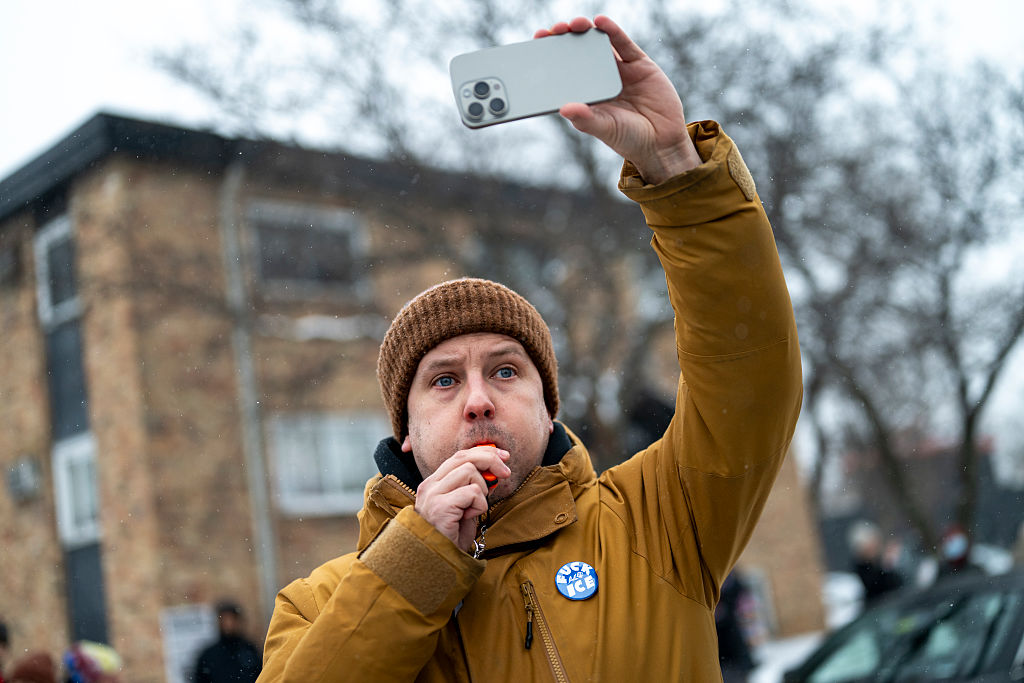
The groups have taken to blowing whistles in warning when ICE vehicles rumble down residential streets. Kavanagh’s law would blow the whistle on blowing whistles. If individuals are “following ICE around,” he said, and the agency moves to “execute some sort of arrest warrant, and they begin blowing whistles, that would be a situation that would encompass this law.”
But then there’s that pesky thing called freedom of speech.
Miriam Wasser
Oh yeah, the First Amendment
When law enforcement agencies operate in public, they have no expectation of secrecy. That would seem to jibe with the Trump administration’s insistence that its army of masked ICE agents is not, in fact, a secret police force. Saying “the police are over there” — with a whistle or otherwise — is not illegal when anyone can see that the police are, well, over there.
“SB 1635 is more of an effort to perpetuate the fiction that people who are out in the street calling out ICE’s lawless behavior and informing people of their rights in enforcement situations, that those people are doing some wrong,” said Noah Schramm, a border policy strategist with the ACLU of Arizona. “That is simply not the case.”
Gregg Leslie, one of the state’s top free speech experts and the executive director of Arizona State University’s First Amendment Clinic, agrees.
“It’s certainly going to be controversial,” Leslie said. “The biggest argument against it is that if you have legally obtained information” — including with your eyes, in broad daylight — “you have a right to communicate it.”
Currently, Arizonans can face prosecution for particularly “egregious” examples of helping a person evade law enforcement as an accessory to the crime, Leslie said. But that should be the “exception rather than the rule.” The overly broad and “troubling” definition of “communicates” in Kavanagh’s bill would give “complete leeway for any kind of action to be interpreted as communication,” Leslie said.
In the bill text, “communicates” is defined as electronic and written communication, gestures, verbal statements, signals such as bells and whistles or “any other method of conveying information that is not listed.” Because the “method of communication is so broad,” Leslie said, posting something on a local community forum or Nextdoor app could be an arrestable offense, despite Kavanagh’s suggestion otherwise to New Times.
When asked about First Amendment concerns, Kavanagh said that the type of communication isn’t protected speech. (The bill would also criminalize people communicating to individuals that officers are aiming to arrest them for non-immigration-related activity, Kavanagh emphasized.) First Amendment experts aren’t so sure.
Schramm pointed out that Kavanagh’s bill includes a severability clause, which allows the rest of the bill to stand if one portion doesn’t pass constitutional muster. Such a clause tends to indicate that the lawmaker suspects the legislation “might have aspects that are unconstitutional,” Schramm said. In Kavanagh’s bill, though, the constitutional concerns are “pretty serious and hard to separate out.”
Gage Skidmore/Flickr/CC BY-SA 2.0
‘An attack on every single Arizonan’
Kavanagh’s bill is a part of a wider effort by state Republicans to crack down on and criminalize rapid response groups that warn community members about the arrival of ICE, Schramm said. Other bills on that slate would expand the definition of a “riot” and create a new “civil terrorism” law.
The activist groups targeted by those laws have been crucial to documenting the rampant abuses of federal agents during Trump’s immigration crackdowns. The two U.S. citizens killed by federal agents in Minneapolis last month — Renee Good and Alex Pretti — were acting as legal observers in a way that many Republicans would like to outlaw. Such attempts to criminalize rapid responders to ICE activity are increasingly “problematic,” Leslie said.
Ortiz was less diplomatic.
“This is an attack on every single Arizonan who has a right to know how law enforcement is acting in our communications,” Ortiz told New Times. “We have a right to share that information with one another.”
It’s unclear what has become of the ethics complaint against Ortiz, which was brought by far-right state Sen. Jake Hoffman. State Sen. Shawnna Bolick, who chairs the Senate Ethics Committee, referred the case to the U.S. Attorney’s Office for the District of Arizona, saying the committee would take up the issue once federal prosecutors had weighed in. Bolick and the U.S. Attorney’s Office have not responded to requests for an update on that referral.
Ortiz said she hasn’t heard anything and maintains she did nothing wrong. The First Amendment is squarely on her side, and the side of anyone who’d be ensnared under Kavanagh’s bill.
“Senator Kavanagh wants secret police to be roaming around in our neighborhoods. He doesn’t care if they’re beating people or gunning them down in the street,” Ortiz said. “He wants us to be terrified to talk about it.”
The bill is set for a hearing today and has a decent chance of passing the Republican-controlled legislature, though it’s probably headed for an eventual veto from Democratic Gov. Katie Hobbs. But if it does somehow become law — a distinct possibility in future legislative sessions, should Hobbs lose her reelection bid this November — it may not result in many convictions. Leslie said the law could be challenged on a “case-by-case basis,” or whenever someone is arrested for violating it.
Defendants busted for whistling that ICE is near could argue, quite easily, that their First Amendment rights protect them.