
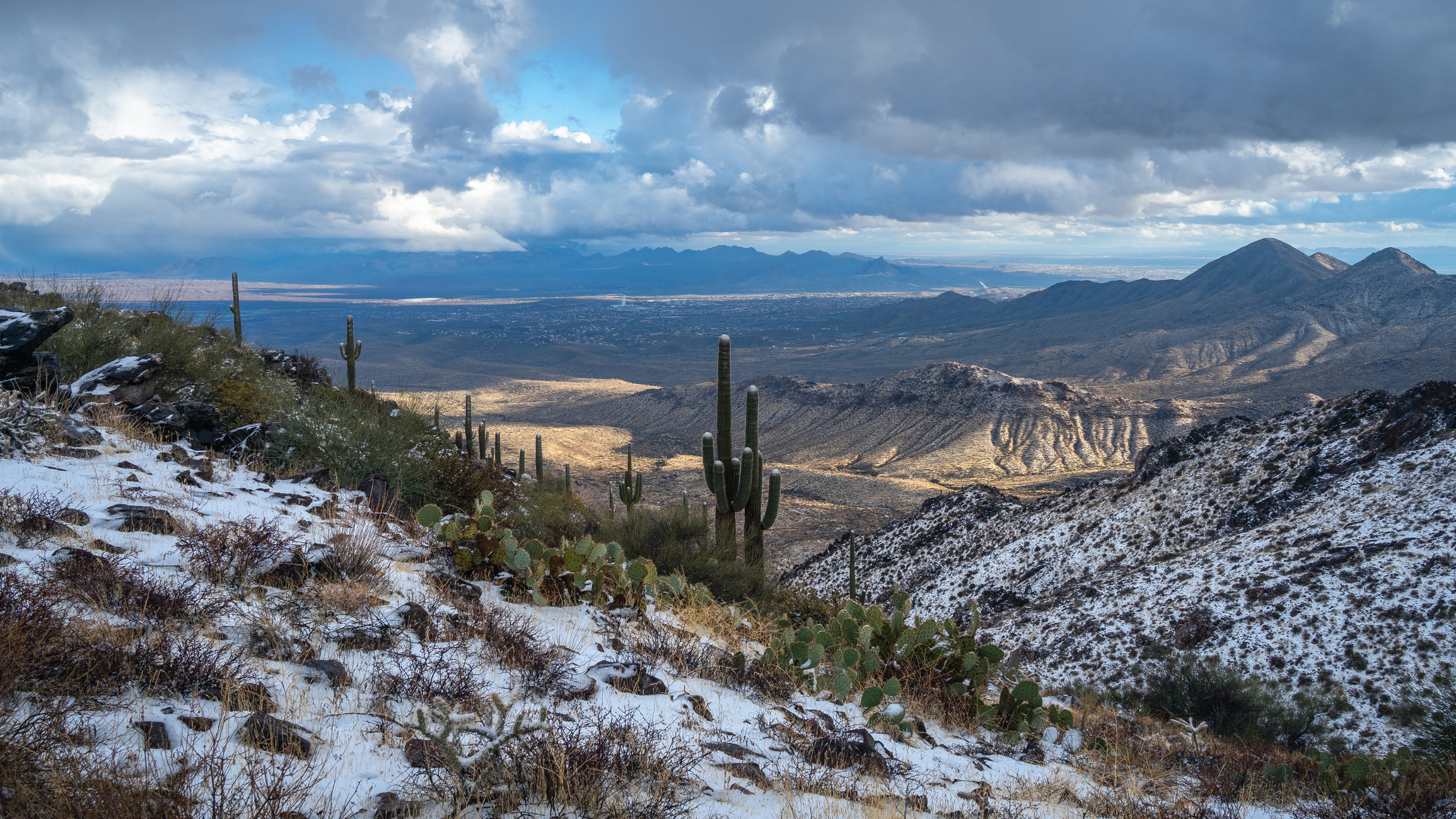
Eric Mischke/Getty Images

Audio By Carbonatix
Phoenix winter is a bit of an oxymoron. Typically, the days remain sunny, with highs reaching the low 70s and nights sometimes dipping into the chilly 40s. But actual freezing temperatures? Pretty rare.
It’s basically a winter-month paradise, which is why snowbirds flock to sunny Phoenix in the winter. Yet, if you’ve felt like this year’s “winter” has been shorter — with February temperatures in the 80s and flirting with the 90s — you’d be right.
According to a study by Climate Central, Phoenix’s shortening winters are a part of a nationwide trend. The research-based nonprofit analyzed winter temperatures across 245 major U.S. cities and found that for 80% of them, winters are getting shorter as global temperatures rise. Winter is shrinking from both ends over the last 28 years, arriving later and ending earlier than it did 50 years ago.
“As the planet warms, all four seasons are warming and the seasonal clock itself is warping — with the hottest time of year lasting longer and the coldest time of year shrinking,” the Climate Central’s study reads.
The study defined winter as the coldest 90 consecutive days of the year in each city from 1970 to 1997. Then, using weather station data from the National Oceanic and Atmospheric Administration for the 245 cities, it compared the frequency of the winter-like temperatures during the most recent 28-year period, from 1998 to 2025. Of the 245 cities examined, 195 are experiencing shorter winters.
On average, those 195 cities saw winter shrink by nine days. Unsurprisingly, the coldest locales — the Alaskan cities of Juneau and Anchorage — saw the biggest winter shrinkage, with the season lasting 62 and 49 fewer days, respectively.
Climate Central
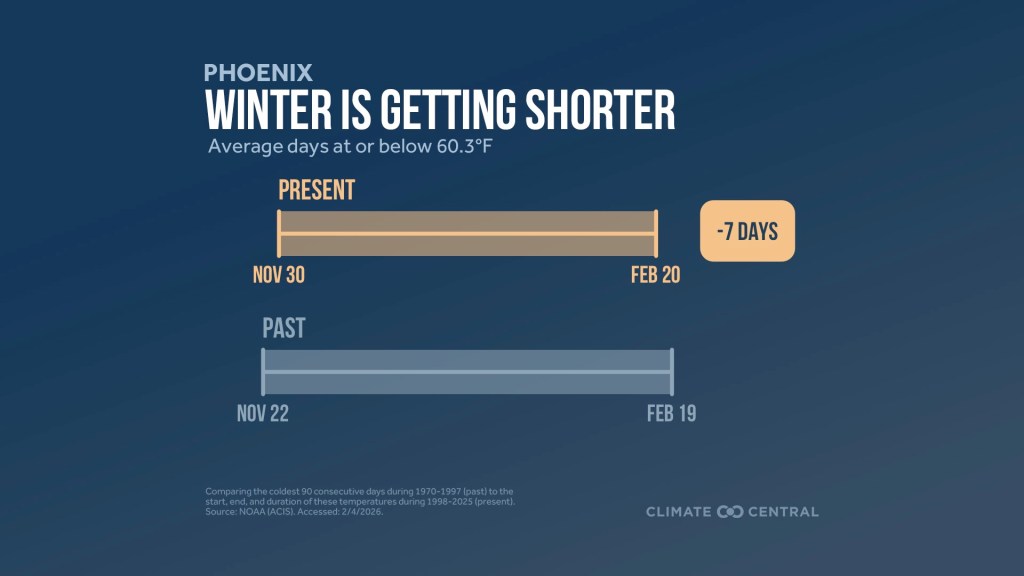
Phoenix has a seven-day drop in the number of winter days, which, for Phoenix, the study defines as days at or below 60.3 degrees. According to Climate Central’s study, Phoenix’s winter lasts 83 days, beginning in late November. It ends around Feb. 20, meaning that this year’s winter in Phoenix has already wrapped up. Relatedly, a similar study by the nonprofit from last year showed that Phoenix’s summer is now eight days longer than in 1970.
A shorter Phoenix winter comes with downsides. In addition to reaching hotter temperatures more quickly, warmer winters can worsen mosquito and pest-related health risks and seasonal allergies by giving plants more time to release allergy-inducing pollen.
Phoenix isn’t the only Arizona city that made Climate Central’s list. Tucson saw the largest drop in winter days, with 13 fewer days. Prescott has four fewer winter days, while Flagstaff has only one. Oddly enough, southwest Arizona’s Yuma was one of the 20% of states that actually picked up a few extra winter days, with an increase of three.