

RapidEye/Getty Images

Audio By Carbonatix
As much as anyone in Arizona, 40-year-old Rachel Combs has suffered the cruelty of America’s opioid crisis.
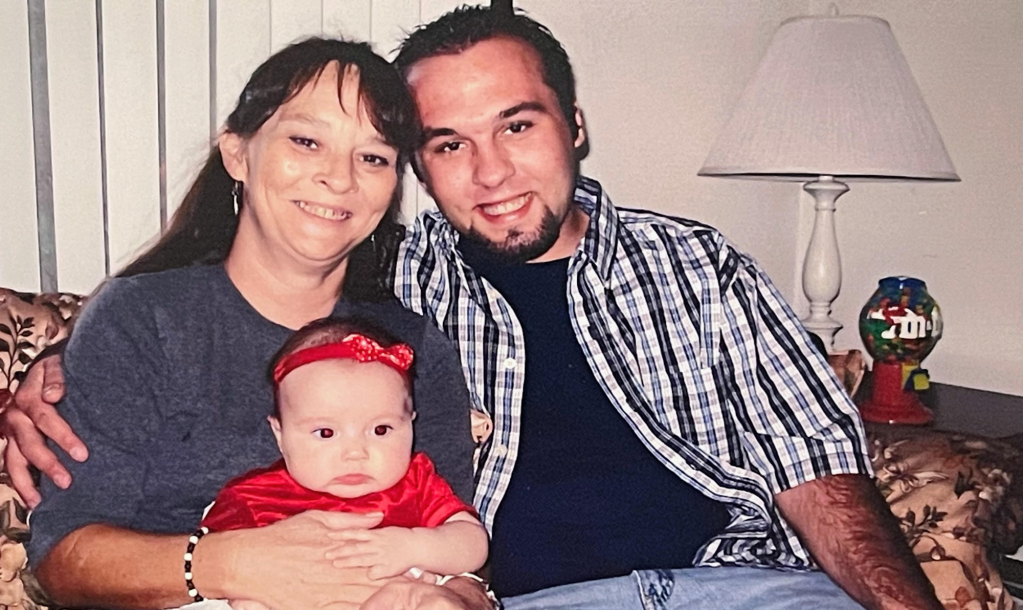
Tragedy first struck the Kingman resident’s family in 2013, when her brother died of a drug overdose at 25 years old. She said her mother, Renee Brunhofer, battled chronic pain and fibromyalgia and started using medication heavily when a doctor prescribed “two different prescription strengths of OxyContin at the same time, as well as fentanyl patches.” When doctors eventually cut her off from the meds, Brunhofer later turned to street drugs.
One day in August 2024, Combs tried calling her mom several times without getting an answer. Her mom’s husband, John Brunhofer, eventually picked up.
“The weird thing is, I thought it was her, because it was her phone, and he almost sounded like her,” Combs said. “It was really strange, and he said that your mom is dead.”
According to a toxicology report performed by the Maricopa County Office of the Medical Examiner, Brunhofer died of a fentanyl overdose. Investigators recovered approximately 1,266 blue pills, referred to as “M30s,” in their home. Combs’ stepfather suffered a similar fate not long after — John Brunhofer also died of a fentanyl overdose last year.
The fates of her mother and stepfather have been difficult for Combs to confront — “I didn’t even talk about my mom’s addiction until very recently because of the stigma and the shame around it,” she said — but her situation is not all that uncommon in the Valley.
Combs’ stepfather was one of more than 5,000 people who overdosed in Maricopa County last year, according to data from the city of Phoenix and the Arizona Department of Health Services. What’s more, the numbers are going in a distressing direction. There were more suspected overdoses per month last year than there were from 2022 to 2024, according to Phoenix’s Office of Public Health. There were 4,258 suspected overdoses in 2024, but 2025 saw a whopping 5,942. Overdose death totals kept by the Arizona Department of Health Services are incomplete for 2025 — DHS blames a data issue — but the department reported more than a thousand overdose deaths in Maricopa County in 2024.
This is a unique case across the country. Arizona remains one of only a few states to have had an increase in overdoses, as a national decline of overdose deaths occurred in 2025, according to the Centers for Disease Control and Prevention.
The problem is getting worse, and there are various theories as to why. The composition of street drugs has changed, experts say. Some politicians want stiffer penalties for selling opioids, while others point to the need for more harm reduction efforts.
No matter the case, the mounting toll of overdoses shows that more needs to be done.
“We need to start addressing the route to addiction,” Combs said. “Until we change people’s minds, we’re not going to change anybody’s actions about it.”
Courtesy of Rachel Combs
‘Keeps me up at night’
Why is the opioid problem in Phoenix getting worse? One reason, Raminta Daniulaityte says, has to do with the stuff on the street.
Daniulaityte is a professor at Arizona State University’s College of Health Solutions. In June, she co-authored a study published in the International Journal of Drug Policy that examined Phoenix’s opioid crisis through the lens of fentanyl pills.
She interviewed drug users, the majority of whom said that fentanyl powder is known to be “significantly more dangerous” than illicitly manufactured fentanyl pills. Despite that, fentanyl powder has become more common on the street as the potency of the pills has waned.
“People are not getting what they need from (the pills),” Daniulaityte said.
That matches what the Arizona branch of the Drug Enforcement Administration has seen. In Arizona, the DEA saw a 79% increase in seizures of fentanyl powder between 2024 and 2025. Cheri Oz, the special agent who led the DEA’s Phoenix field office last year, said that many drug users are turning to powder to maintain their habit, leading to extreme variance in dosage.
Many participants in Daniulaityte’s study were aware of the dangers of fentanyl powder — “Almost like you playin’ Russian Roulette when you’re smokin’,” one man told researchers — but that risk gets overlooked when addiction persists.
The DEA reports that the potential lethal dosage of fentanyl pills has decreased from eight out of 10 being fatal to only three out of 10, but that has resulted in users taking more pills to feel the same effects or resorting to powder, which is harder to precisely dose.
“The opioid dependent community is ingesting more pills, knowing that the potency has gone down and that the recipes have changed a little bit on the Sinaloa side of the manufacturing,” Oz said. “If you’re taking more, if you get one hot pill in your mix, that could likely cause an overdose.”
But Oz is more concerned about carfentanil, a synthetic opioid that the DEA says is 100 times more dangerous than fentanyl itself.
Last March, the DEA saw an influx of carfentanil in the Arizona market, which Oz called an “anomaly.” In May, the agency put out a nationwide alert warning about the surge of carfentanil, which is so potent that it’s known to require more than one dosage of naloxone to reverse an overdose.
“Fentanyl scares me,” Oz said. “Carfentanil keeps me up at night.”
While the DEA gets a snapshot of drug usage through seizures, the drug scene in Arizona remains largely unknown to academics. That’s in part because many testing strips beyond those measuring fentanyl are classified as drug paraphernalia under state law.
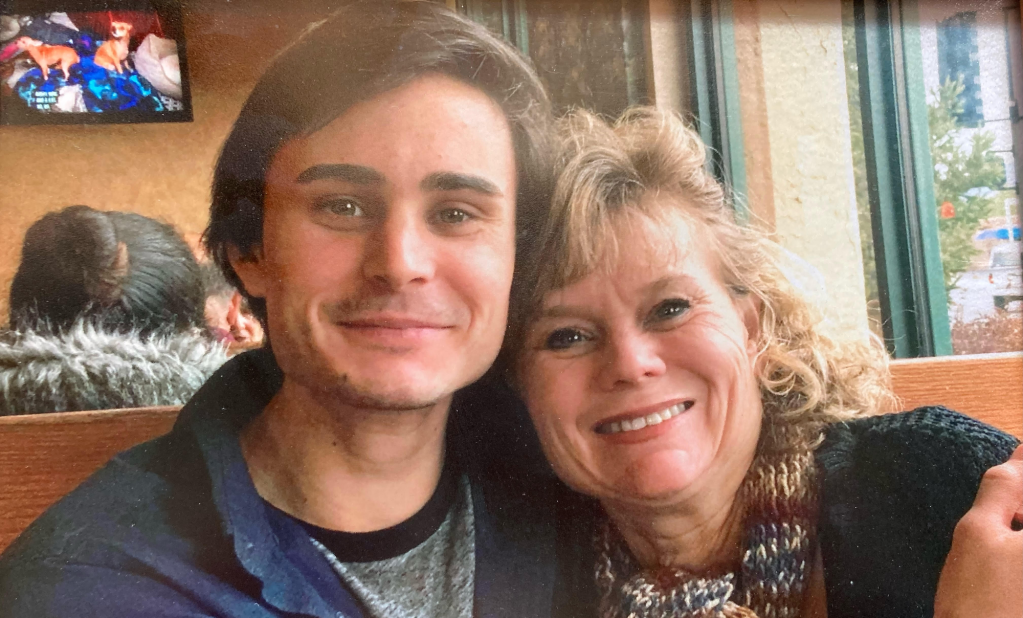
Former state Sen. Christine Marsh knows that well. She lost her son, Landon Marsh, to an overdose in 2020. A mechanical engineering student at Northern Arizona University, he went out one night with a close friend from middle school. He took a laced pill and died of an overdose at 25 years old.
“They had a young, stupid night and got a street Percocet that was laced with fentanyl and that’s what killed him,” she said.
Six months later, Marsh won election to the Arizona Senate, where she resolved to pass harm reduction legislation. Generally speaking, harm reduction is the practice of ensuring that drug users can use them safely, with the acknowledgement that prohibition and criminalization only push drug use further and more dangerously underground.
In 2021, Marsh successfully passed a bill to make Arizona one of more than 40 states that exempt narcotic testing kits for fentanyl or a fentanyl analog from being considered illegal drug paraphernalia. However, Arizona law does not exempt testing kits for additives like xylazine — an animal tranquilizer found in the illegal U.S. drug supply that increases the potency of drugs like fentanyl.
Marsh, who lost her reelection bid in 2024, attempted to pass legislation that would exempt all testing equipment, but it went nowhere. The Maricopa County Attorney’s Office did not provide information on the prevalence of prosecutions for items like xylazine testing strips, but state law says the possession of drug paraphernalia is a class 6 felony punishable by up to two years in prison.
Courtesy of Christine Marsh
Reducing harm
A popular way to combat the opioid epidemic is criminal prosecution. Republicans and Democrats alike tout drug busts and the seizure of fentanyl pills — the Maricopa County Attorney’s Office says it secured more than 5,300 fentanyl-related convictions in 2024 — but there have also been efforts to criminally crack down on drug users.
Republican state Rep. Quang Nguyen of Prescott has been behind some of those. Last year, he secured the unanimous passage of a bill to enhance the sentence for people caught with 200 grams or more of fentanyl with intent to sell, which now carries a minimum sentence of five years. This legislative session, he’s introduced a bill to lower the threshold for such a felony from 200 grams to 100 grams.
“You have to have sympathy for the victim,” Nguyen told Phoenix New Times, “but at the same time, you have to be hard on the criminals who are actually taking advantage of the victims.”
Nguyen said he also wants to make harm reduction efforts easier — “I will make sure that I get this message to the right people, to make sure that we introduce these bills to make it easier for testing,” he said — but those causes have been less politically popular.
Some interventions, like making naloxone easy to access, enjoy broad support. Providing testing strips, needle exchanges and safe injection sites, less so.
Dr. Melody Glenn, an associate professor of psychiatry and emergency medicine at the University of Arizona College of Medicine, says they shouldn’t be.
“Harm reduction is something we do every day, especially in Arizona,” Glenn said. “We put on sunblock when we go outside. We wear seat belts in the car. We wear helmets on bicycles, and all those are our harm reduction that we practice. This is no different harm reduction when it comes to drugs. It could be getting out naloxone. It could be clean syringes, clean pipes and alcohol swabs before injecting, educating people on safer injecting practices.”
Recently, though, there have been more attempts to rein in harm reduction efforts than attempts to expand them. Last year, Democratic Gov. Katie Hobbs vetoed a Republican-backed bill that would have prohibited the formation of so-called prevention centers — essentially safe-injection sites where drug users can take drugs (obtained elsewhere) under supervision. There are indications that such centers, which are more prevalent outside the U.S., dramatically reduce overdoses.
Arizona has no prevention centers, nor is the state on the verge of having one. The only state-sanctioned prevention center in the country opened in Rhode Island in 2024. While Glenn supports the idea of safe injection sites, she’d rather see lawmakers focus on harm reduction strategies that are more likely to clear the state legislature.
While the vetoed bill attacked what is at this point only a theoretical harm reduction strategy in Arizona, the Phoenix City Council recently voted to limit current harm reduction efforts in city parks. In December, the council approved a new ordinance banning medical treatment in parks that is not sanctioned by the city, though the administering of naloxone is excepted. Councilmembers said that residents have been complaining about parks feeling unsafe due to drug use.
Phoenix engages in other harm reduction strategies — namely, the distribution of naloxone, with more than 25,000 kits distributed since the program’s inception in 2023. But the vote to curb harm reduction in parks was met with backlash from groups that help the unhoused, who argued that it won’t stop drug use but will make it riskier.
“This is a health crisis,” said Councilmember Anna Hernandez at a council meeting in October, two months before she cast the lone vote against the harm reduction ordinance. “I truly believe that the answer is always going to be to work hand-in-hand with harm reduction, with education on safe use, to make sure that we’re investing into those types of solutions.”
Even Oz, who touted several DEA initiatives to raise awareness about the dangers of opioids, said enforcement will never stem the tide of overdoses and addiction.
“We are not going to arrest ourselves out of this crisis,” she said. “We have really made every effort to engage the community and to put ourselves out there as much as we can, to educate and be part of the prevention and outreach community.”
That resonates with Combs. After the loss of three family members to addiction, she knows well how shame can suffocate the chances of recovery. Only recently has she felt confident enough to discuss the issue publicly. She’s begun involving herself in community efforts to tackle the opioid epidemic, and in September, she attended the Walk For Lives in Phoenix, an event dedicated to ending fentanyl deaths in the U.S.
The route to addiction needs to be addressed if change can happen, Combs said. People struggling with opioid addiction need compassion and help, she said. Lives are on the line.
“There’s still so much shame around addiction, and it’s easier to ignore it and blame the addict than to do something to help solve this problem in our society,” Combs said. “It’s getting worse.”