

Circle K

Audio By Carbonatix
I’m not one who just figured out the world runs on data. I’m 38 years old. But I do remember a world without the internet, when everything wasn’t connected, logged, synced and stored somewhere. I remember when buying something didn’t automatically mean leaving a digital trail behind you.
We’re tracked now. Phones listen, cards log, cameras watch. Everyone has known this for a long time. The part that bothers me isn’t that it’s happening, but how quickly we’ve decided this is just the cost of doing normal, everyday things.
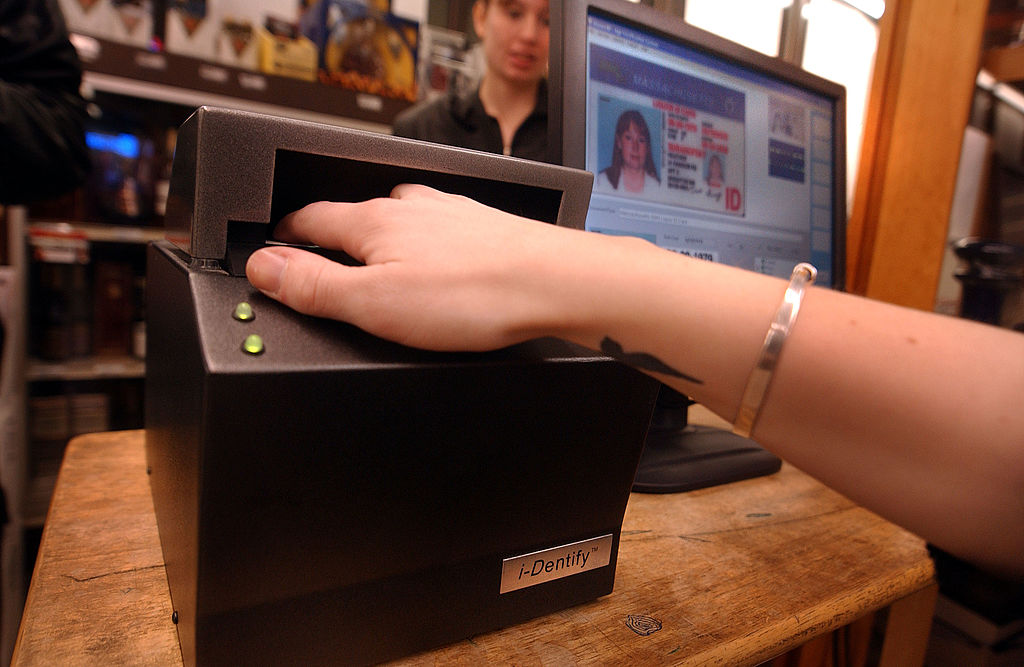
This hit me recently at a Circle K in Phoenix, where I popped in to buy a six-pack of beer and a can of Zyns. I was told my ID needed to be scanned to “verify my age.” Not looked at. Not checked. Scanned. I work for a living. I don’t look under 21. I was struck by how automatic it was, how expected it was, as if the clerk thought I should know to have it ready. Even if you had just been in the store and already had your ID scanned, the process would be exactly the same. No discretion. No memory. Just scan it again.
Let’s stop pretending this is really about age.
When a driver’s license is scanned, the barcode doesn’t just say “over 21.” It carries your name, address, date of birth, license number and more. When that scan is paired with a debit or credit card purchase, your identity and your behavior can be linked. What you buy, where you buy it, how often — all of it logged somewhere you’ll never see. In many cases, that information is shared or sold to third parties you’ve never heard of, for purposes you were never clearly told about. That’s not paranoia. That’s how these systems are designed.
“I don’t care if I’m being tracked,” I hear people say. “I’ve got nothing to hide.” Those people miss the point. That’s like saying you don’t care about the First Amendment because you don’t have anything to say, or that you don’t care about due process because you’ve never been arrested. Rights don’t exist for the days when everything’s fine — they exist for the days when it isn’t.
Privacy isn’t about hiding. It’s freedom. It’s the ability to move through the world without being constantly recorded, categorized and remembered by systems that never forget and never explain themselves.
Darren McCollester/Getty Images
This didn’t start at Circle K. I noticed it years ago when sporting events went cashless. An annual bowl game ritual with my friends — which had once felt loose, loud and fun — was now tightly managed. Tickets and phones were scanned, bags were searched and cameras were everywhere. Everything smooth and efficient…and weirdly cold. I wasn’t doing anything wrong, but I felt watched the entire time. Processed more than welcomed. And like everyone else, I went along with it. What was I going to do, turn around and go home?
We’ve all passively opted into this kind of passive surveillance. Nobody forces you. They just make participation conditional. Go along to get along. Scan here. Tap there. Agree without reading. It’s easier than pushing back, so most people don’t.
I love this country. I believe in the Constitution, not as a slogan or a costume, but as a warning. The people who wrote it understood something we seem to be forgetting: Freedom usually isn’t taken all at once. It’s traded away in small, reasonable steps, each one sold as being for our own good. The Founding Fathers revolted because power had become distant, automated and unaccountable, exercised by a system that no longer saw them as people but as subjects to be managed.
Today, that power doesn’t wear a crown or fly a foreign flag. It lives in software, algorithms and artificial intelligence systems that decide, record and flag automatically — without context, without judgment and without anyone you can actually talk to when something goes wrong. Behind those systems sits a small, unelected class of tech elites who’ve decided (for all of us) what progress is supposed to look like.
We’ve all seen the “futuristic” movies where everyone is under constant surveillance. What they got wrong is that it wouldn’t feel dramatic or scary. It would feel boring. Normal, like buying a six-pack of beer at a gas station on a Saturday night. With the daily advancements of AI and the implementation of surveillance systems like Flock Safety and Palantir, things are only getting worse.
Don’t call me a Luddite. I’m not anti-technology, and I’m not saying smash the machines. We should just stop pretending this is harmless. If Circle K truly only needs to verify my age, then a visual check should be enough. And if scanning is mandatory, then customers deserve straight answers about what’s collected, what’s stored and who else gets access to it.
Are we just going to keep shrugging as the walls quietly close in, or will we remember that free people are supposed to be trusted a little more than this?
A good question to ponder over a beer. Circle K has a great selection — just be prepared to tell them almost everything about you.
Ryan Brady is a carpenter who grew up and lives in the Valley.